
Organized by: Department of Anatomy, T.S. Mishra University & T.S. Mishra Medical College, Lucknow Sponsored by: National Academy of Medical Sciences (NAMS), New Delhi
Under the Aegis of: Society of Clinical Anatomists (SOCA), India
Program: Anatomy CME cum Hands-on Workshop on Integrating Artificial Intelligence into Biomedical & Clinical Research
Date: October 15, 2026 – World Anatomy Day
Mode: Offline
Guest Speaker: Mr. Roshan Singh, Founder & CEO, Scrollwell
Session Focus: AI for Research
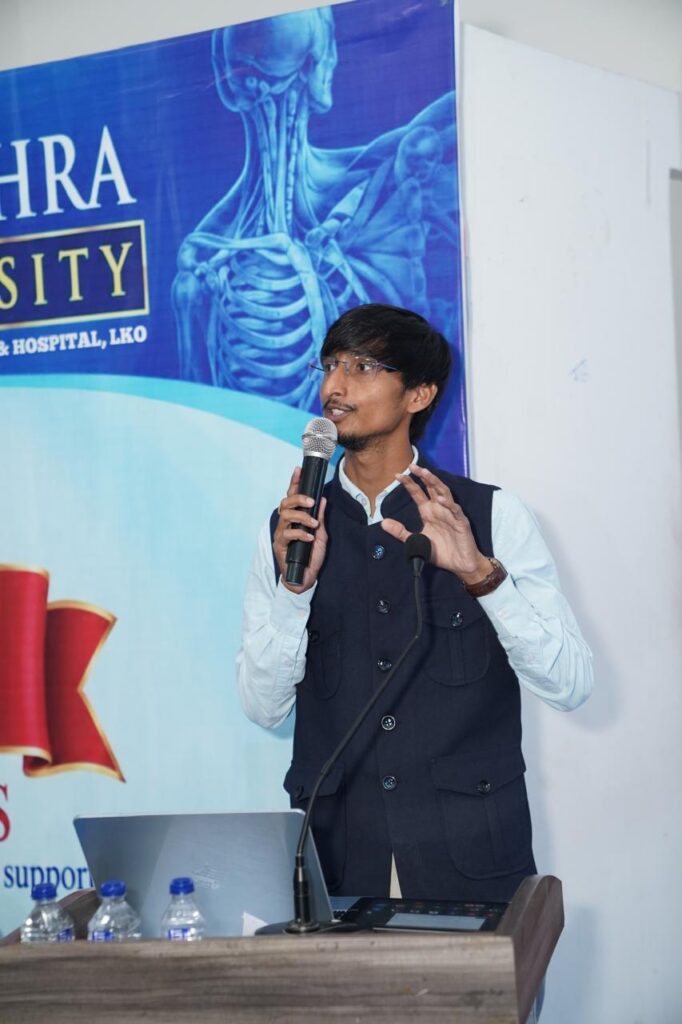
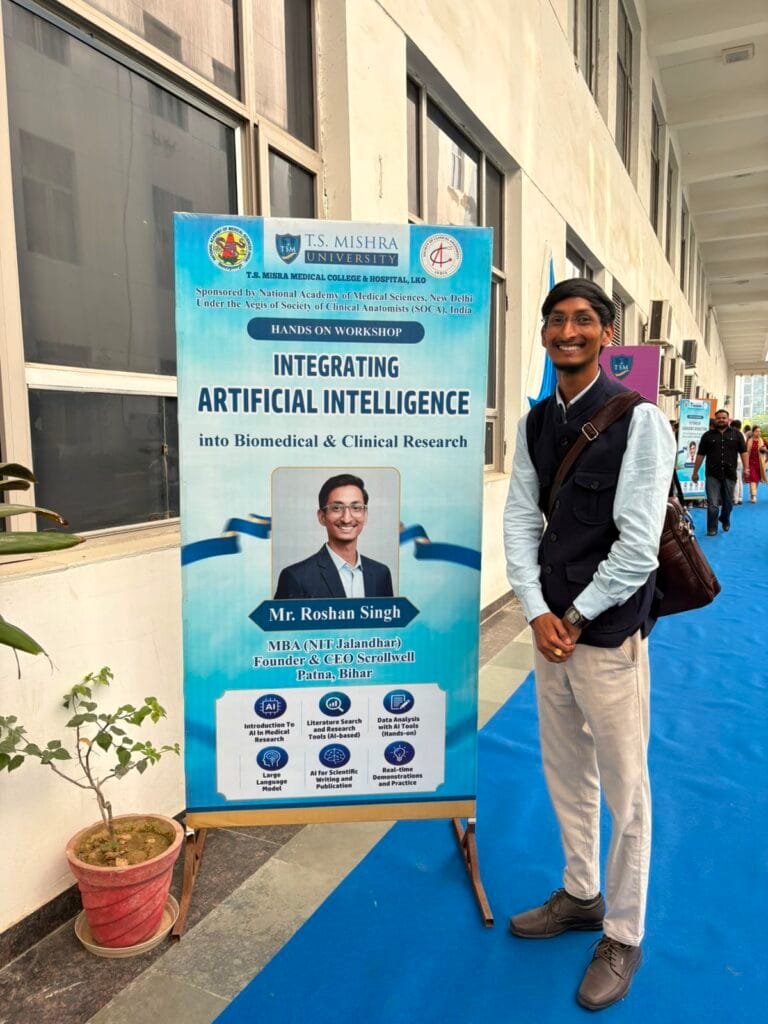
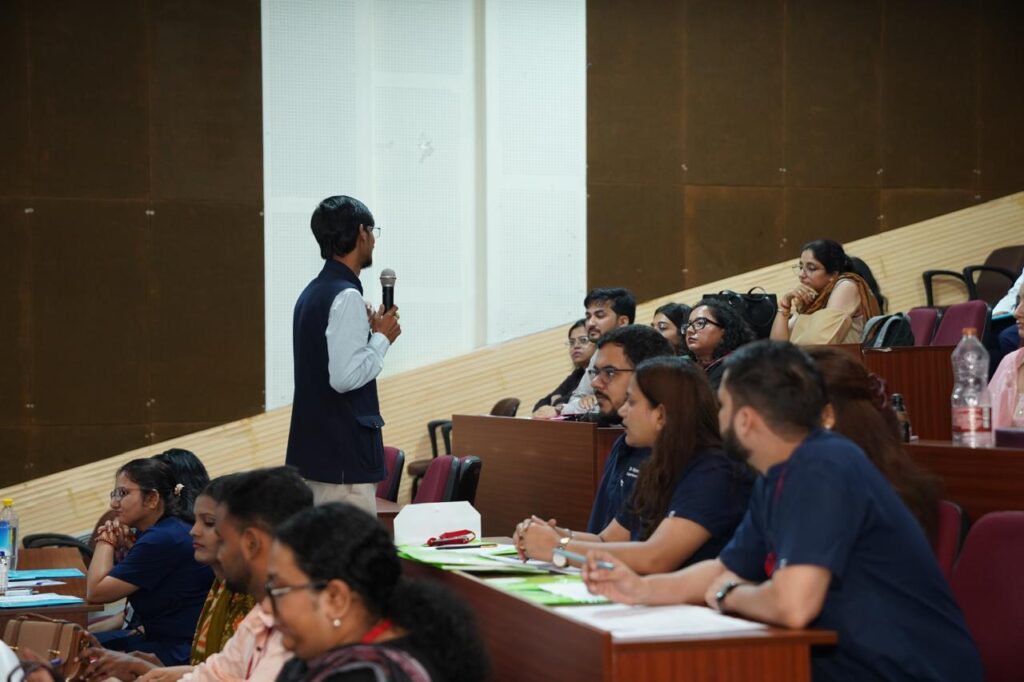
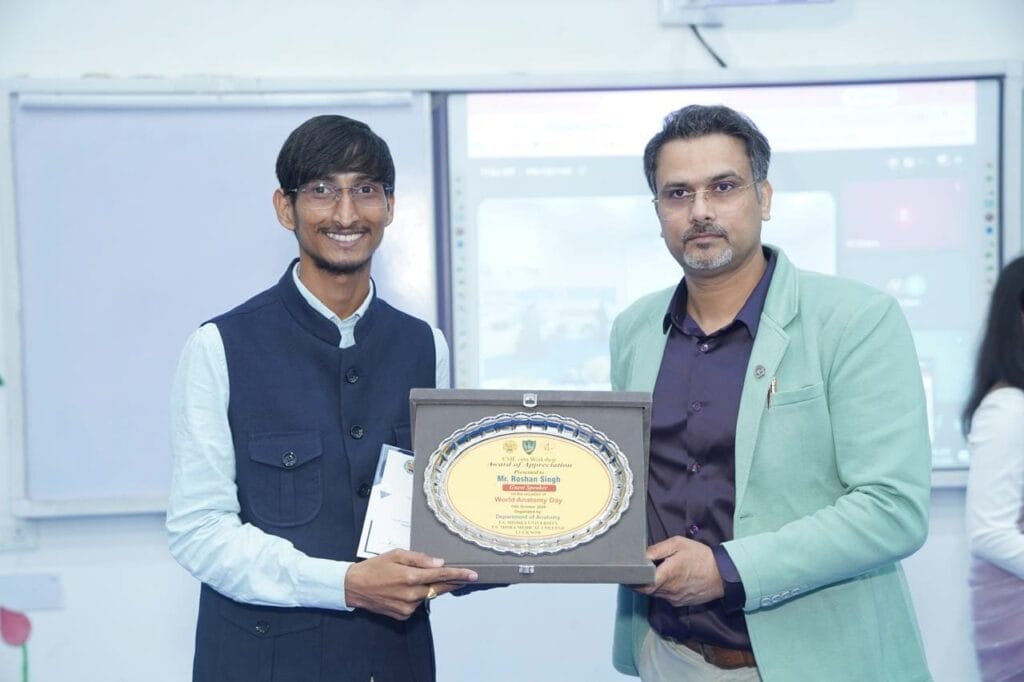
On World Anatomy Day, October 15, 2026, Mr. Roshan Singh, Founder and CEO of Scrollwell, was invited as a Guest Speaker at the Anatomy CME cum Workshop organized by the Department of Anatomy at T.S. Mishra University and T.S. Mishra Medical College, Lucknow.
The workshop, titled “Integrating Artificial Intelligence into Biomedical & Clinical Research,” was sponsored by the National Academy of Medical Sciences (NAMS), New Delhi, and held under the aegis of the Society of Clinical Anatomists (SOCA), India. The event focused on exploring how artificial intelligence can support research workflows in biomedical and clinical settings.
During the session on “AI for Research,” Mr. Roshan Singh discussed how AI tools can assist researchers with literature discovery, data analysis, scientific writing, and publication. The session also highlighted the importance of maintaining researcher judgment and oversight while using AI in academic and clinical research.
Event Highlights
The session explored practical applications of AI in biomedical and clinical research. First, Mr. Roshan Singh introduced AI tools that can support different stages of the research process. These included literature discovery, data analysis, and scientific writing.
Next, the session covered AI-powered literature search and research tools. Participants explored how these tools can help identify relevant studies and organize research information. As a result, researchers can build a stronger foundation for their research questions and literature reviews.
The session also examined data analysis using AI tools. Participants learned how AI can assist with understanding datasets and interpreting information. In addition, the discussion highlighted the value of using AI to support research analysis while maintaining accuracy.
Finally, the session covered Large Language Models (LLMs) and AI-assisted scientific writing. Mr. Singh discussed how AI can support writing, editing, and manuscript preparation. However, he also emphasized the need to verify AI-generated content and maintain research integrity. Human judgment remains essential, especially when working with biomedical and clinical information.
Participation Details
The offline workshop brought together faculty members and delegates interested in anatomy, biomedical research, clinical research, and emerging technologies. The in-person format provided opportunities for direct interaction with the guest speaker and discussion of AI applications in research.
The session by Mr. Roshan Singh formed part of the broader workshop theme of integrating artificial intelligence into biomedical and clinical research. It connected current AI capabilities with practical research activities, helping participants explore where these tools may support their academic work.
Outcomes
The session provided participants with an overview of how AI tools can support literature discovery, data analysis, and scientific writing. It highlighted opportunities to streamline research tasks and improve productivity across different stages of the research process.
Participants were also encouraged to use AI critically and responsibly. The session reinforced that researchers must independently verify information, assess the reliability of AI-generated outputs, and retain responsibility for the accuracy and integrity of their work.
Feedback
The session offered a platform to discuss the growing role of AI in research and its relevance to biomedical and clinical disciplines. Questions and interactions from faculty members and delegates contributed to discussions on the practical use of AI tools in academic research.
The workshop also provided an opportunity to highlight the balance between technological assistance and human expertise, particularly in research areas where accuracy, evidence, and responsible interpretation are essential.
Acknowledgments
Scrollwell extends its sincere gratitude to the Department of Anatomy, T.S. Mishra University and T.S. Mishra Medical College, Lucknow, for inviting Mr. Roshan Singh as a Guest Speaker for this workshop on World Anatomy Day. We also acknowledge the support of the National Academy of Medical Sciences (NAMS), New Delhi, and the Society of Clinical Anatomists (SOCA), India, for supporting this academic initiative.
Special thanks to the organizing team and all participating faculty members and delegates for their thoughtful interactions, interest in emerging AI tools, and commitment to advancing biomedical and clinical research.
Stay updated on Scrollwell’s upcoming Faculty Development Programs, AI workshops, research training sessions, and academic initiatives. Join the Scrollwell WhatsApp Channel for updates on upcoming programs and opportunities to strengthen research and academic skills through AI