
Organized by: Scrollwell
Program: 14-Day Faculty Development Program on Research in the Age of AI: Manuscript Development, Scopus-Indexed Publications and Grant Writing
Date: May 25 – June 07, 2026
Time: 06:00 PM – 07:00 PM
Mode: Online via Zoom
Duration: 14 Days | 1 Hour Daily
Participants: Faculty members, researchers, PhD scholars, postgraduate students, and academic professionals
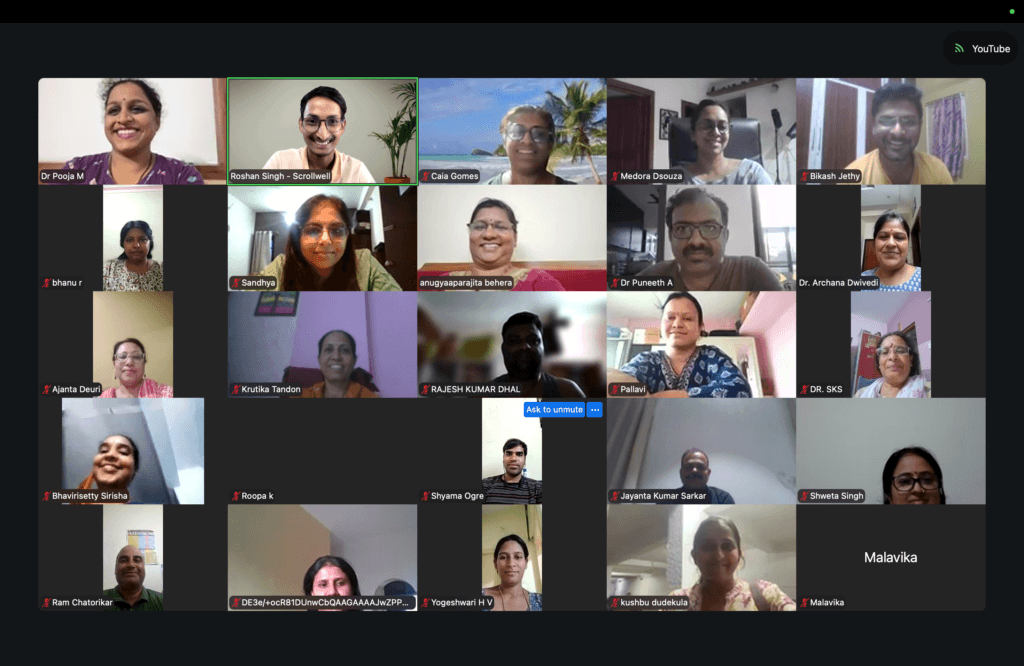
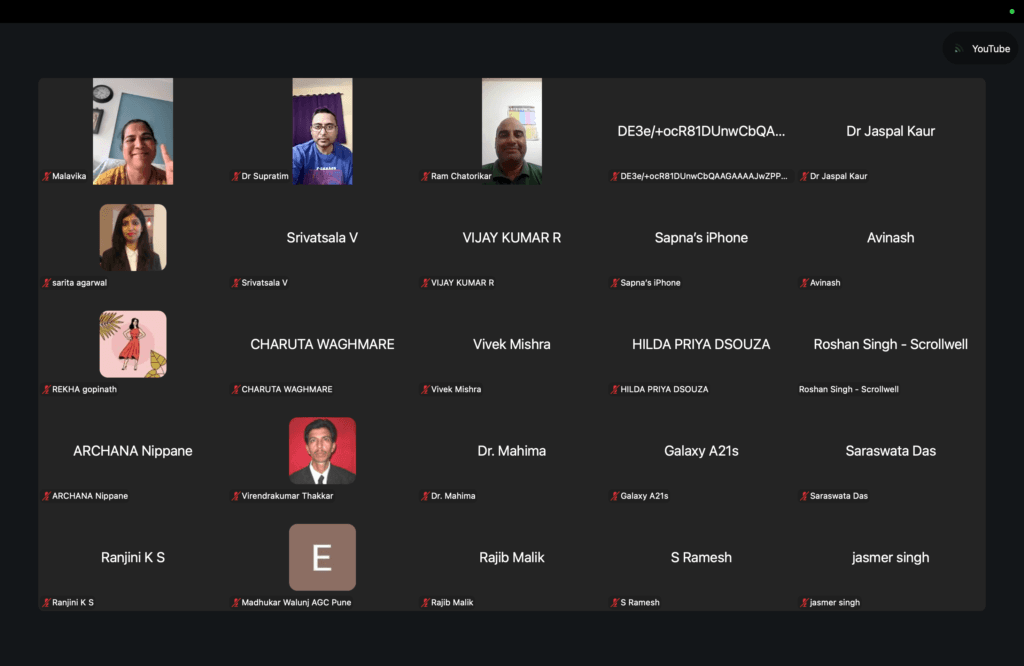
The 14-Day Faculty Development Program on Research in the Age of AI: Manuscript Development, Scopus-Indexed Publications and Grant Writing was successfully conducted by Scrollwell from May 25 to June 07, 2026. The program was designed to help researchers and academicians navigate the rapidly evolving research landscape by integrating Artificial Intelligence into research, publication, and funding processes.
As research practices continue to evolve, the program provided participants with practical strategies to improve research productivity, enhance publication quality, and develop competitive grant proposals. Moreover, it focused on combining traditional research methodologies with modern AI-driven tools to create efficient and impactful research workflows.
Event Highlights
Over the course of fourteen days, participants explored the complete research lifecycle with the support of AI-powered tools and techniques. The sessions began with an introduction to modern AI systems and their applications in academic research. Participants learned effective prompting techniques and explored methods for transforming research materials into summaries, visual representations, and structured insights.
Furthermore, the program covered AI-assisted literature review techniques, systematic review methodologies, and research exploration strategies. Participants gained hands-on exposure to identifying relevant research trends, organizing literature, and developing stronger research foundations.
A significant focus was placed on manuscript development and academic publishing. The sessions guided participants through the process of structuring research papers, improving academic writing quality, selecting suitable Scopus-indexed journals, and understanding publication requirements. In addition, participants learned practical approaches to increasing publication readiness and improving research visibility.
The FDP also introduced participants to AI-supported data analysis techniques, qualitative research methods, and academic writing workflows. Sessions on grant proposal development provided valuable insights into preparing competitive research proposals and effectively communicating research impact.
Throughout the program, the resource persons emphasized ethical AI usage, academic integrity, originality, and responsible adoption of emerging technologies in scholarly work.
Participation Details
The FDP attracted faculty members, researchers, doctoral scholars, and academic professionals from diverse disciplines and institutions. The online mode enabled participants from different regions to engage actively while maintaining flexibility in learning.
Participants remained highly engaged throughout the sessions. They actively participated in discussions, raised research-related queries, and explored practical applications of AI in their respective domains. The interactive format encouraged continuous learning and knowledge sharing among attendees.
To reinforce learning, periodic assessments and activities were conducted during the program. These exercises helped participants evaluate their understanding and apply newly acquired skills in real-world research scenarios.
Outcomes
By the conclusion of the FDP, participants developed a comprehensive understanding of how AI can support various stages of academic research. They gained practical skills in literature review, manuscript development, journal selection, academic writing, and grant proposal preparation.
Furthermore, participants learned how to leverage AI tools to improve efficiency without compromising research quality or ethical standards. As a result, they became more confident in integrating AI into their research workflows and academic responsibilities.
The program also enhanced participants’ awareness of emerging trends in scholarly communication, helping them prepare for the future of AI-enabled research and publication.
Feedback
Participants appreciated the structured curriculum, practical demonstrations, and research-oriented approach of the program. Many highlighted the relevance of the topics and the immediate applicability of the techniques discussed during the sessions.
Additionally, attendees valued the balance between conceptual understanding and hands-on learning. The guidance on Scopus-indexed publications, manuscript development, and grant writing received particularly positive feedback. Overall, participants described the FDP as insightful, impactful, and highly beneficial for their academic and research careers.
Acknowledgments
Scrollwell extends its sincere gratitude to all participants for their enthusiastic involvement and commitment throughout the fourteen-day program. Special appreciation is extended to the resource persons for sharing their expertise, practical insights, and valuable experiences. Their contributions played a crucial role in making the FDP informative, engaging, and impactful.
We also thank the academic community that continues to support initiatives focused on strengthening research capabilities and promoting innovation through AI-enabled learning.
Join our WhatsApp Channel to stay updated on upcoming Faculty Development Programs, research workshops, AI training initiatives, and professional development opportunities by Scrollwell.
Continue exploring the future of research with AI and become part of a growing network of educators, researchers, and innovators shaping the next generation of academic excellence.